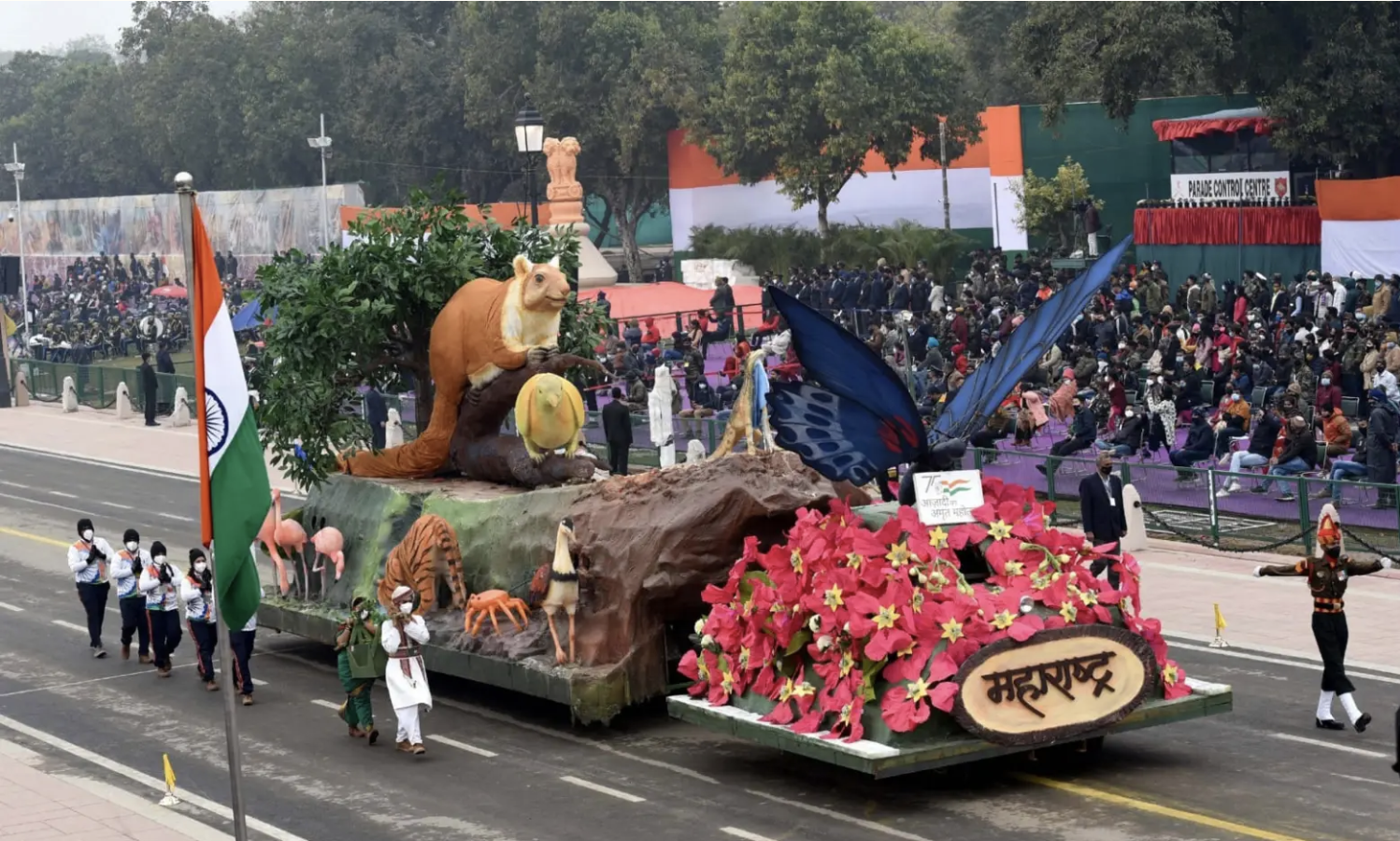
#Maharashtra's Biodiversity
Maharashtra's rich floral and faunal diversity is well-supported by the state's three vital biogeographic zones: Deccan Plateau, the Western Ghats, and the West Coast. In addition to the Western Ghats – a biodiversity hotspot and a UNESCO World Heritage Site, Maharashtra also has an 840 km long coastline along the Arabian Sea.
Currently, 6 National Parks, 48 Wildlife Sanctuaries, and 6 Conservation Reserves constitute the Protected Area Network of the State, covering 3.03% of its geographical area.
#State Symbols
(Shekru)
The Indian Giant Squirrel, locally known as Shekru, is a large tree squirrel species found in the forests of Maharashtra. It is known for its vibrant multi-colored fur and is an important part of the state's biodiversity.
(Hariyal)
The Yellow-footed Green Pigeon, known as Hariyal in Marathi, is a beautiful bird species found across Maharashtra. It is characterized by its green plumage and distinctive yellow feet.
(Papilio polymnestor)
The Blue Mormon is a large, beautiful butterfly species native to Maharashtra. It is one of the most striking butterflies found in the Western Ghats region, known for its vibrant blue and black wings.
(Mangifera indica)
The Mango tree is the state tree of Maharashtra. This tropical fruit tree is widely cultivated across the state and holds cultural and economic significance. Mango is also known as the "King of Fruits."
(Lagerstroemia speciosa)
Jarul, also known as Pride of India or Queen's Crepe Myrtle, is the state flower of Maharashtra. It produces beautiful purple to pink flowers and is commonly found in gardens and parks across the state.
(Sonneratia alba)
The Mangrove Apple Tree, scientifically known as Sonneratia alba, is an important mangrove species found along Maharashtra's coastal regions. This tree plays a crucial role in coastal ecosystem protection and is vital for maintaining the biodiversity of Maharashtra's coastal wetlands and mangrove forests.